
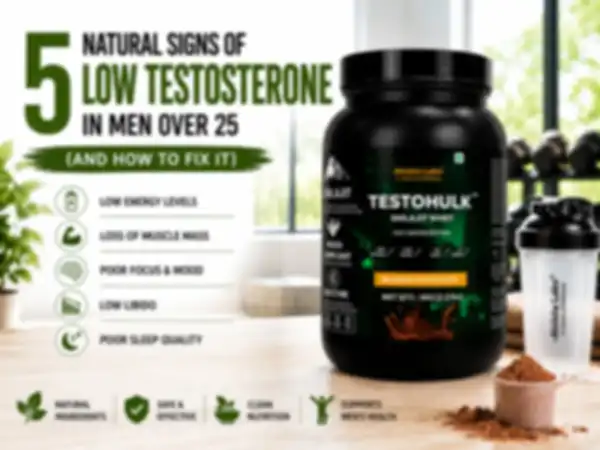
5 Natural Signs of Low Testosterone in Men Over 25 (And How to Fix It)
Written by: Krishna Kant Tyagi (Founder & CEO, Alvista Labs)
Medically Reviewed by: Dr. Kritika Pandey (Ayurvedic Physician)
Published: June 2026 | Category: Men's Health & Nutrition
Let’s be completely honest for a moment.
After you cross 25, your body starts changing in ways nobody really warned you about. You wake up exhausted even after a full eight hours of sleep. Your gym gains start to stall. Your mood feels all over the place. Somewhere deep down, you might even start wondering—is something wrong with me?
More often than not, the answer isn't that you’ve suddenly become lazy or weak. The real culprit might be a silent dip in your hormone levels. Today, thousands of young men in India actively search for low testosterone symptoms in hindi and English, trying to understand why their baseline energy has vanished.
Testosterone isn’t just about building massive muscles or maintaining masculinity. It is the core chemical messenger that regulates your cellular energy, mood, metabolism, physical recovery, and overall drive. When it drops—even slightly—the ripple effects are incredibly real, disrupting your daily life more than most men realize.
In this guide, we are going to break down the 5 most common signs of low testosterone in men over 25, look at the medical science of what’s happening inside your body, and show you exactly how to build testosterone naturally.
What Is a Normal Testosterone Level? (And Is 9.5 Too Low?)
Before looking at the symptoms, let’s address one of the most frequently searched questions by men reviewing their blood work: is 9.5 testosterone low?
To understand this number, we have to look at the standard laboratory measurement units and how international clinical bodies define healthy ranges:
Measurement TypeStandard Normal RangeWhere 9.5 SitsTotal Testosterone (nmol/L)9.5 to 30 nmol/LRight at the bottom boundaryTotal Testosterone (ng/dL)270 to 870 ng/dLRoughly equivalent to ~274 ng/dL
According to official clinical guidelines issued by the Endocrine Society, a confirmed diagnosis of low T (hypogonadism) typically requires a clear total serum reading below 300 ng/dL alongside persistent physical symptoms.
So, to answer directly: Yes, 9.5 nmol/L is low. While it sits right on the borderline of what clinical labs label "normal," it is at the absolute floor of the spectrum. If you are a young man over 25 experiencing clear symptoms, a borderline number like 9.5 means your body isn't operating at its peak potential.
Normal Testosterone Levels by Age
It is completely natural for your levels to shift as you grow. Here is how optimal total testosterone ranges typically look across different life stages:
- Age 19–24: 300 – 1,000 ng/dL (Peak vitality stage)
- Age 25–34: 300 – 860 ng/dL (Stabilization period; gradual drop begins at ~1% per year)
- Age 35–44: 300 – 800 ng/dL
- Age 45+: 270 – 650 ng/dL
Medical Review Note: Context matters more than a standalone number. Two men can have the exact same testosterone reading; one might feel completely vibrant, while the other experiences severe fatigue. If you suspect an imbalance, getting a comprehensive fasting male panel blood test (available at most reputable pathology labs in India for under ₹500) early in the morning is your essential first step.
The 5 Natural Signs of Low Testosterone to Watch For
Sign 1: Persistent Fatigue That Sleep Won't Fix
You know that heavy, draining tiredness that a morning cup of coffee can’t seem to touch? The kind where you feel like you need a nap just a few hours after waking up?
This is one of the most frequently overlooked signs of low testosterone. Clinical data compiled by the American Urological Association (AUA) confirms a direct, statistically significant link between low androgen levels and diminished subjective energy metrics in young men. Testosterone plays a foundational role in red blood cell production and mitochondrial function—which is essentially how your cells generate energy.
- What to do: Prioritize 7 to 9 hours of uninterrupted sleep, as the vast majority of male testosterone production occurs during deep, slow-wave sleep cycles. Minimizing alcohol before bed and incorporating traditional adaptogens can also support cellular rejuvenation.
- The Ancient Fix: This is where exploring shilajit benefits for men becomes highly relevant. Pure Himalayan Shilajit has been shown in clinical trials to enhance mitochondrial energy production and significantly support free testosterone levels over a 90-day period.
Sign 2: Loss of Muscle Mass Despite Consistent Training
Few things are more frustrating than hitting the gym consistently, tracking your protein, and watching your physical progress actively stall or reverse.
Because testosterone is your body’s primary natural anabolic hormone, it is directly responsible for muscle protein synthesis and tissue repair. When your systemic levels fall, your body struggles to maintain a positive nitrogen balance. As a secondary effect, you might notice your body storing stubborn fat more easily—particularly around the midsection—even if your diet hasn’t changed.
- What to do: Build your workout routines around heavy, compound movements (like squats, deadlifts, and overhead presses) which naturally stimulate an acute endocrine response. Additionally, your post-workout nutrition needs to work harder for you.
- The Targeted Approach: To bridge the gap between sports recovery and hormonal health, look for optimized formulations like TESTOHULK™ Shilajit Whey Fast Absorb Protein. It delivers 25g of fast-absorbing isolate whey protein combined with pure Himalayan Shilajit and Ayurvedic extracts like Gokshura and Black Musli to assist muscle repair while supporting your natural endocrine environment.
Sign 3: Low Mood, Irritability, and a Lack of Drive
We often talk about hormones affecting physical traits, but they have a massive impact on your brain chemistry. Testosterone interacts directly with dopamine and serotonin receptors in the brain.
When a man's testosterone levels dip, it doesn't just reduce physical strength; it can dull his mental edge. You might experience unexplained irritability, brain fog, a sudden drop in self-confidence, or a general feeling of mental "flatness"—where things that used to excite you suddenly feel like a chore.
- What to do: Do not underestimate the power of morning sunlight. Studies by organizations like the Indian Council of Medical Research (ICMR) highlight widespread Vitamin D deficiency in urban India due to indoor lifestyles. Because Vitamin D acts as a crucial hormone precursor, correcting a deficiency can directly lift both mood and baseline testosterone. Time-tested Ayurvedic herbs like Kapikacchu (Mucuna pruriens) are also traditionally utilized to support cognitive clarity and dopamine pathways.
Sign 4: Reduced Strength and Decreased Stamina
Have you noticed that your regular lifting weights feel unusually heavy? Or that you are getting winded much faster during cardio sessions or sports?
Testosterone heavily influences neuromuscular efficiency and the density of your muscle fibers. When your levels are sub-optimal, your physical ceiling drops. This isn't just standard aging; a healthy man can maintain excellent strength markers well into his 30s, 40s, and beyond if his hormonal foundation is properly supported.
- What to do: Practice strict progressive overload in the gym—gradually increasing weight or volume over time to signal to your body that it needs to produce more testosterone to adapt. Furthermore, audit your intake of micronutrients like Zinc and Magnesium, which are vital components for hormone synthesis and are frequently missing in typical modern diets. Traditional herbs like Gokshura (Tribulus terrestris) have been relied upon for generations to support male vitality and physical stamina.
Sign 5: Prolonged Muscle Soreness and Slow Recovery
Your body heals and rebuilds itself when you rest. Because testosterone is a primary driver of tissue repair and modulates your body’s natural anti-inflammatory responses, low levels mean your recovery window stretches out significantly.
If you find yourself experiencing intense muscle soreness (DOMS) for three or four days after a moderate workout, or if you seem to catch every minor seasonal cold and virus going around, your body’s regenerative capacity may be compromised.
- What to do: Never skip your recovery days. Ensure your digestive system is functioning perfectly, as poor gut health directly impairs the absorption of the healthy fats and minerals required to manufacture hormones. Traditional bitter herbs like Kutaki are highly valued in Ayurveda for supporting optimal liver function, which plays a central role in metabolic balance and nutrient processing.
Do Testosterone Boosters Really Work? (And Are They Safe?)
When men search for the best testosterone booster in India, they are often met with conflicting information. Let's clear up the confusion with a direct answer.
Pharmaceutical interventions like Testosterone Replacement Therapy (TRT) involve introducing synthetic hormones into the body. This is a serious medical treatment that carries real medical risks and potential testosterone booster side effects—such as a reduction in natural sperm count and red blood cell imbalances—and should only ever be done under the strict supervision of a qualified endocrinologist.
On the other hand, high-quality, natural supplements do not introduce artificial hormones into your system. Instead, they focus on how to raise testosterone fast and safely by providing the vital micronutrients and botanical compounds your body needs to maximize its own natural production, while simultaneously lowering stress hormones like cortisol (which actively suppress testosterone).
Is a testosterone booster tablet safe? Yes, provided you are choosing naturally formulated, clean, lab-tested supplements from transparent brands. Always avoid unverified products that hide behind "proprietary blends" without sharing clear ingredient dosages.
How to Build Testosterone Naturally: The Lifestyle Blueprint
If you want to optimize your hormones from the ground up, implement these five evidence-backed daily habits:
- Protect Your Sleep Window: Scientific studies show that restricting sleep to 5 hours a night for just one week can slash your daytime testosterone levels by up to 15%. Aim for a consistent, dark, cool sleeping environment for 7–9 hours.
- Eat Healthy Fats: Hormones are literally constructed from cholesterol and healthy dietary fats. Don't starve your body; include whole eggs, nuts, ghee, and avocados in your daily diet.
- Manage Cortisol: Stress is the ultimate testosterone killer. When your stress hormone (cortisol) goes up, your testosterone goes down due to a biological phenomenon known as the "pregnenolone steal." Use breathwork, meditation, or weights to decompress.
- Lift Heavy Weights: Focus your physical training on large muscle groups. Heavy rows, presses, and leg work provoke the highest natural hormonal release.
- Ditch the Excess Alcohol: Even moderate alcohol intake before bed can disrupt deep sleep cycles and impair the liver’s ability to process and balance your hormones effectively.
The Bottom Line
A drop in testosterone isn't an exclusive problem for older age groups—it is becoming increasingly common in men over 25 due to modern stress, sedentary routines, and nutritional gaps.
If you recognize yourself in two or more of the signs outlined above, don't ignore it. Start by auditing your daily sleep patterns, getting a simple blood test to find out your true baseline, and providing your body with the clean, natural nutritional support it needs to thrive.
Recommended Wellness Support
If you are looking for a clean, dual-action formula that supports both your daily fitness nutrition and your hormonal health, consider TESTOHULK™ Shilajit Whey Fast Absorb Protein by Alvista Official.
It represents a premium fusion of clean isolate whey protein and traditional Ayurvedic male wellness botanicals designed to help you recover faster and maintain healthy hormone levels naturally.
- Premium Quality: 25g Isolate Whey Protein per scoop with 5.5g BCAA | 12g EAA.
- Hormonal Complex: Enriched with pure Himalayan Shilajit, Gokshura, Black Musli, Kapikacchu, and Kutaki.
- Safety Assured: ISO & GMP certified, NABL lab-tested, and completely free from any banned substances.
- Flavored for Daily Use: Authentic Belgian Chocolate flavor
Frequently Asked Questions
Q: How do I boost my testosterone fast?
A: The most rapid natural adjustments come from correcting an acute sleep deficit, lifting heavy weights, eliminating sugar/alcohol binges, and correcting common deficiencies like Vitamin D3 and Zinc. Natural herbal adaptogens like Shilajit can help accelerate this recovery process.
Q: Is 700 ng/dL a normal testosterone level?
A: Yes, according to standard parameters, 700 ng/dL is an excellent, healthy, and vibrant testosterone level for an adult male. It places you comfortably in the upper-middle quadrant of the optimal physiological range.
Q: Does not ejaculating for 7 days increase testosterone?
A: Clinical studies show a temporary, transient spike in testosterone around the 7th day of abstinence, but the levels quickly return to your baseline shortly after. Long-term hormonal vitality is built through consistent lifestyle habits, diet, and sleep—not temporary abstinence.
Q: Can I take testosterone booster tablets daily?
A: Natural herbal supplements designed to support your body's endocrine system are safe for daily use, provided they are third-party lab tested and free from synthetic additives. Always consult your personal doctor if you have any pre-existing medical conditions.
Q: What are the strongest natural testosterone-supporting herbs?
A: Pure Himalayan Shilajit, Gokshura (Tribulus terrestris), Ashwagandha, Black Musli, and Kapikacchu are among the most thoroughly researched and historically trusted botanicals for supporting natural male vitality.
Disclaimer: This article is for informational purposes only and does not constitute formal medical advice. Always consult a qualified healthcare professional before starting any new supplement regimen or making major changes to your health routine.